Childhood memory prompts: start with one room
You do not have to remember your whole childhood to write something worth keeping. Start with a place you can picture: the kitchen after school, a shared bedroom, a grandparent's porch or the steps outside an apartment. Describe one detail, follow one ordinary moment, and leave room for what you do not know.
By MemoirWell · Updated
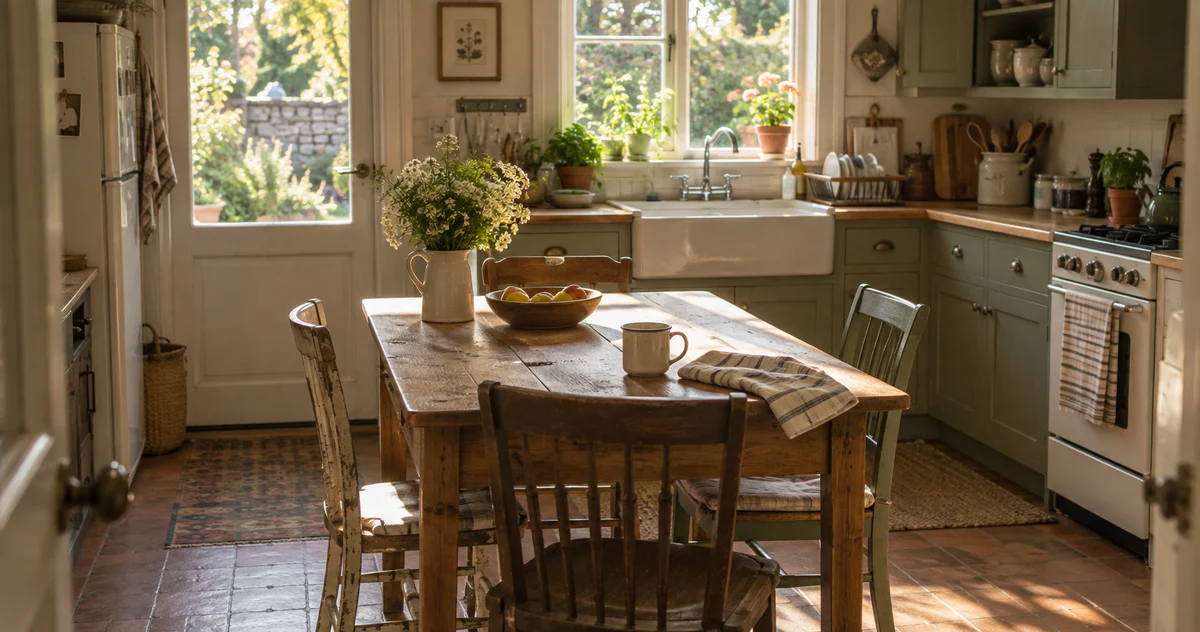
Choose a home, then make the subject smaller
“My childhood” is a difficult writing assignment. “Waiting at the kitchen table for my brother” gives you somewhere to begin. Pick one home and one period, even if the period is only “before we moved” or “when I was in elementary school.” If you lived in several homes, keep this first note to one of them.
The place need not be where you lived. A relative's house, a neighbor's yard or a school hallway can work. Choose somewhere you want to spend a few minutes thinking about. You can move to another place or stop whenever you wish.
On paper, draw a rough doorway and the first two or three things you remember seeing from it. This is a writing aid, not an accurate floor plan. Leave a space blank if you cannot place it. A question mark is more useful than furniture added because it seems likely.
Room-by-room prompts for an ordinary day
Choose two or three prompts from the table. You are looking for a moment you can describe, not trying to answer a questionnaire perfectly.
| Starting place | A question to try | A smaller scene to follow |
|---|---|---|
| Front door or hallway | What did you do first when you came home? | Where a bag, shoes or coat ended up on one afternoon. |
| Kitchen | Where did people sit or stand, and what were they doing? | Waiting for someone, clearing a plate or watching a task. |
| Bedroom | What was within reach of your bed? | One evening with a book, a shared light or an object you kept. |
| Living room | What happened when everyone wanted the same space? | A particular game, visit or quiet hour. |
| Yard, balcony or window | What could you see from your usual spot? | Waiting for a visitor or watching a familiar journey. |
| Route nearby | Which part of the trip could you describe without a map? | A turn, a crossing or somewhere you regularly stopped. |
For memories of your teenage years, use the same approach with a different place: a bus stop, a first job, a friend's room or the route home. Ask what you did there on one occasion. You do not need to reconstruct everything that was popular at the time.
A 15-minute childhood-memory exercise
- Minutes 1–3: place yourself. Write where the scene begins and roughly when. “The apartment before high school” is a usable time marker.
- Minutes 4–6: choose a detail. Write one object, sound, texture or habit you actually remember. If only an image comes to mind, use that. There is no requirement to supply every sense.
- Minutes 7–11: follow an action. What did someone do first? What happened next? Where does this small moment end? Use a remembered routine if no single day stands out, and call it a routine.
- Minutes 12–13: add your view now. What catches your attention today that you did not think about then?
- Minutes 14–15: mark the edges. Underline anything uncertain. Label a detail taken from a photograph or someone else's account.
If a timer feels like pressure, leave it out. The exercise is finished when you have a useful note, even if that is only three sentences. You can follow the same structure in our free memory-writing worksheet and download your answers without an account.
From a detail to a short scene: an invented example
Starting note: “Kitchen before we moved. School bag under table. Chair nearest door scraped. Waiting for my brother. Looked up at hallway sounds. Not sure which year.”
I put my school bag under the kitchen table and sat in the chair nearest the door. Its legs scraped when I pulled it out. I remember waiting there for my brother and looking up whenever I heard someone in the hallway. I cannot place the year. It belongs to the period before we moved, when that kitchen was where I waited for people to come home.
This fictional paragraph uses only the details in its starting note, plus their stated connection. It does not add the color of the walls, an exact age, dialogue or a reason the brother was late. Those details might make a smoother story, but the writer would first need a reason to include them.
A separate reflection could follow: “What interests me now is how much of my day was spent waiting for other people.” That is the adult writer's interpretation. It need not be presented as something the child understood at the time.
Keep three kinds of information distinct
| What you have | How to write it |
|---|---|
| Your recollection | “I remember the chair scraping the floor.” |
| A detail from another source | “In the photograph, the table is next to the window.” Or: “My sister says we moved that summer.” |
| An open question | “I am not sure whether this was before or after the move.” |
A photograph can supply a visible detail without proving that you independently remember it. A relative can remember a different arrangement of the same room. Keep both accounts and their names rather than silently choosing the tidier version.
The Smithsonian's oral-history guidance recommends open questions, one question at a time, and distinguishing a narrator's own experience from an account heard elsewhere. If you ask a relative about this scene, try “What do you remember about that kitchen?” before offering your description.
If only fragments come back
Make a small list: “window latch,” “wet coats,” “someone calling from downstairs.” Pick one fragment and describe only what you can. You can also write about not knowing: which room you cannot place, what a photograph leaves unclear, or which question you would like to ask.
A complete scene is optional. A clearly labeled fragment can be more valuable to a future reader than a confident paragraph assembled from guesses. These prompts organize what you can recall; they do not establish whether a recollection is accurate or recover a missing event.
Keep the note, then decide whether it needs a chapter
Give the note a plain title, such as “The kitchen after school.” Add the date you wrote it and, separately, the approximate period it describes. Save any source notes beside it. If another memory follows, start a new note instead of forcing both into the same scene.
For a longer project, the next useful step is a question: what happened in this place that changed something, showed a relationship or became a recurring part of your life? Our guide to writing a memoir helps place individual scenes in a larger story. MemoirWell's guided interview is another option when you want to develop one of these notes into a chapter you can review.
FAQ
What should I write if I remember very little of my childhood?
Begin with one fragment you can describe, or write down what remains unknown. A place, an object or an everyday routine is enough for a short note. These prompts do not promise to recover forgotten events.
Do I need an exact address or year?
No. A broad period such as before high school or before a move can work. Keep estimates labeled as estimates and add an exact date only when you have a source for it.
Can I use these prompts for teenage memories?
Yes. Try a bus stop, school corridor, first workplace or friend's home. Choose one moment and separate what you remember then from what you understand now.
What if my relative remembers the home differently?
Record both versions with attribution. Ask an open question and compare any available photos or documents. You do not have to resolve every difference before keeping the story.
Sources and review date
This guide and its sources were reviewed on .